ERRECI
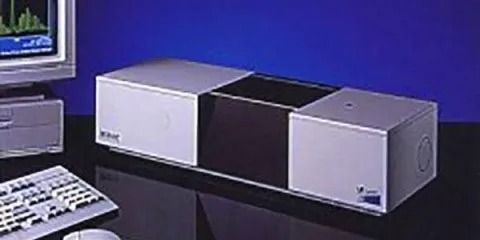
MIDAC M2000 FTIR Spectrophotometer
high resolution [0.5 cm-1]
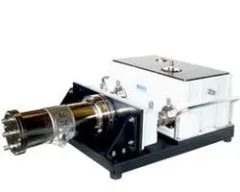
MIDAC M2000
The M2000 model is the version designed for those who use this type ofinstrumentationmainly inlaboratoryIts modular construction allows the simultaneous installation of two detectors, as well as the possibility of interfacing the system with various accessories (microscopes,detectorexternal, etc.) via an external optical output.
The sample compartment is large and flexible and allows the insertion of various sampling media, so that it is possible to analyze any type of substance, be it solid/semi-solid, liquid or in the gaseous phase.
The main technical features of the M2000 series are:
- Resolution is variable from 32 to 0.5 cm-1;
- Standard beamsplitter in Kbr/Ge “moisture coated” (anti-humidity);
- Spectral range 7800...350 cm-1. (KBr optics as standard; other optical versions on request);
- Air-cooled SiC (Silicone Carbide) IR source with 1650 Kelvin emission;
- Fully sealed and coated optics to maintain specifications over time.
Interspect 200-X - Aree applicative
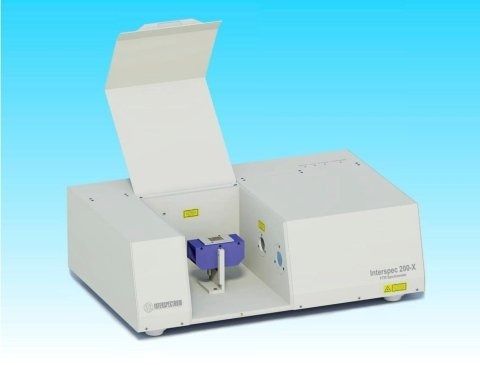
The Interspec 200-X series of Fourier Transform FTIR spectrometers employ a number of unique features that deliver high performance from a compact instrument. Measuring just 59 x 39 x 19 cm, the Interspec 200-X is considered one of the most compact and versatile infrared FTIR spectrophotometers. The 200-X's design is unique in both its optics and its software and firmware, specifically designed to significantly reduce analytical times. The Michelson interferometer geometry utilizes a novel self-compensating optical system. The Interspec 200-X's design eliminates the need for conventional corner cube optics and dynamic alignment. This means the instrument can be used in virtually any environment.
Samples section
The sampling compartment is very large and allows for the analysis of all types of samples compatible with FTIR spectroscopy. This compartment can accommodate the full range of accessories provided by specialized accessory manufacturers.
Interspec 300-X
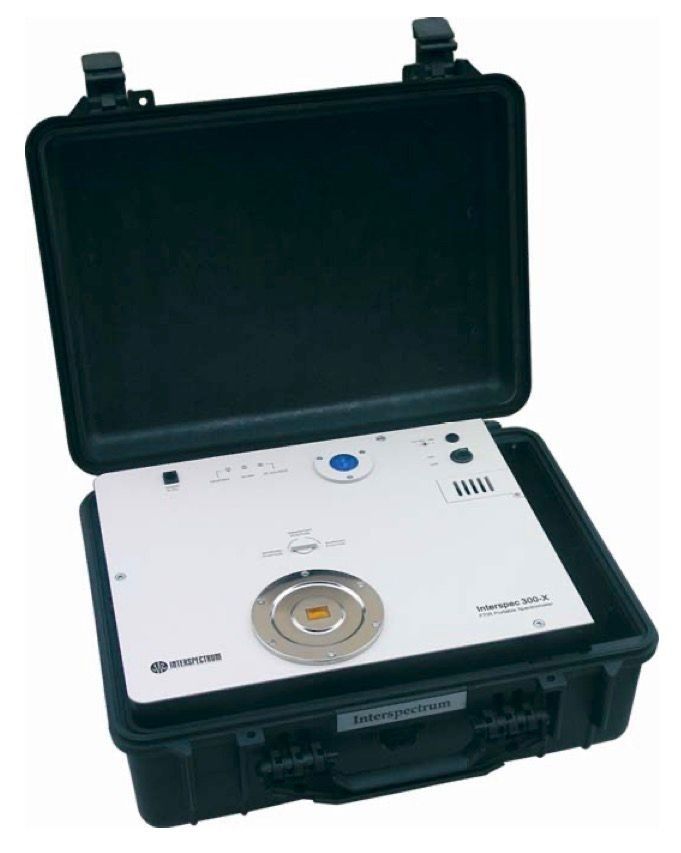
The Interspec 300-X series comprises a range of portable Fourier transform infrared and near-infrared FTIR spectrometers, featuring unique technologies that deliver high performance in an extremely compact design.
The Interspec 300-X measures just 49 X 39 X 20 cm and is considered one of the most compact and versatile infrared FTIR spectrometers available.
The Michelson interferometer geometry uses a new compact, self-compensating optical system that eliminates many of the optical alignment issues found in conventional optical interferometers.
TITAN Series
The TITAN Series Fourier Transform Spectrometers are designed for continuous-flow operation using the technique known as analyst “extraction”.
The instruments can be configured with gas cells made from different materials, with varying optical path lengths (from 1 cm to 100 m), and with temperature control and pressure monitoring. Their particularly robust honeycomb construction, combined with the interferometer’s unique features, allows them to be used in any position and under any operating conditions (outdoors, on a mobile platform, in an industrial plant, or in damp and dusty environments, etc.).
The distinctive technology of these analyzers makes them more robust and accurate than any other system currently available for emissions analysis; their specifications even exceed those of many research-grade FTIR spectrometers.
With a resolution of 0.5 cm-1, an MCT (Mercury Cadmium Telluride) detector, and a wide spectral range of 7800…350 cm-1, the MIDAC system belongs to the select group of research-grade instruments and is unmatched by any other analyzer of its kind.
Open-path emission monitoring system
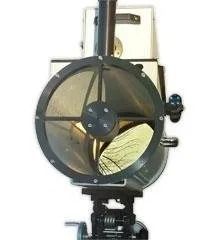
TheM2400 Series Fourier Transform SpectrometersThey are built to operate in emission. They can be equipped withtelescopefor aiming at samples distant from the detection system. The construction features are identical to the TITAN series mentioned above. The M240X model forms the basis for various open-path monitoring systems and infrared radiometry.
- The basic system operates in emission up to approximately 50 meters.
- To operate beyond 50 m up to approximately 1 km, the use of an appropriate telescope is required.
- In case the temperature difference between the sample and the detector is insufficient for the detection of the sample itself, the system can be easily transformed into the “Bistatic Configuration”.
- The Bistatic Configuration involves the addition of an external source to the emission system, in order to recreate the same operating conditions as traditional transmission work.
- Depending on the OPERATING ENVIRONMENT and the WORKING SPECTRAL RANGE, it is necessary to diversify the type of optics and the Detector.
- Field of view 20 mrad. (without telescope). Aperture 3.8 cm.
- MIDAC CORPORATION is able to offer spectrometers operating in the MIR and NIR, with appropriate detectors and completely hydrophobic optics.
MIDAC AUTOQUANT
Software for gas analysis and FT management
ESSENTIAL for FT-MIDAC
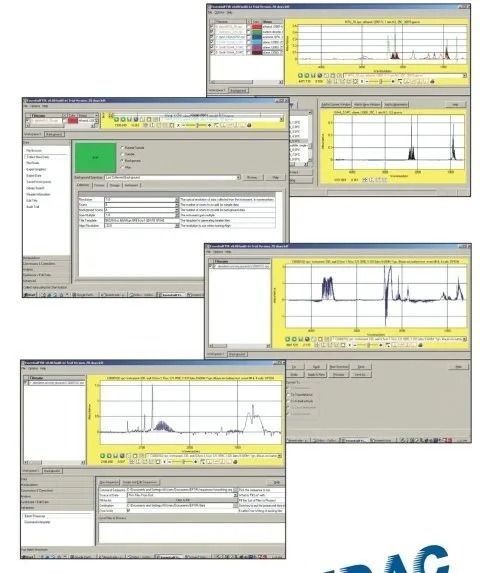
- It runs on Microsoft WINDOWS™ XP, is optimized for 32-bit, is multitasking, and is easy to use using the “point and click” system.
- ESSENTIAL is the most complete software for the analytical laboratory because it can acquire, visualize, process and organize data like never before.
- You can easily IMPORT or ACQUIRE data from different analytical instruments (UV-VIS, IR, NMR, DIODE-ARRAY, CHROMATOGRAPHS, etc.) into a single program for standardized data processing, viewing, and organization. The program has a completely open architecture, allowing for complete customization.
- Data Processing includes the largest collection of mathematical algorithms used today such as FFT, Apodizations (about ten), Zero Filling and Polynomials up to the sixth order, Baseline Corrections, Deconvolutions, Interpolations, Derivatives of all orders and degrees, Interactive Subtractions, Smoothing, Integrations, Peak-Statistics (area, heights, FWHH, center of gravity, etc.), Curve Fitting, etc.; representations in T%, R%, Abs, E, Log, etc.; “Main” mathematical functions of Gauss, Lorentz, Log-normal, Voigt, Pearson VI, Savitsky-Golay, KM, Tchebichev, etc.
- It is possible to modify existing algorithms for particular solutions and create specialized Macros using the “Array-Basic” Interpreter language.
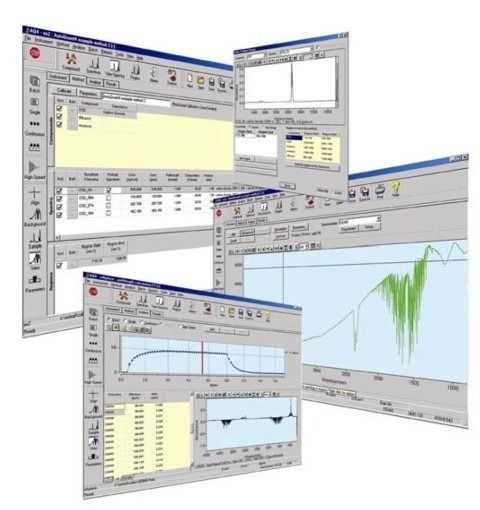
This software was designed and developed in collaboration with NASA; its purpose is to control the FT Midac; it is dedicated to gas analysis and operates under Microsoft WINDOWS™ XP. Autoquant operates in 32-bit multitasking and is easy to use thanks to the "point and click" method.
The program allows direct online viewing of the infrared spectrum being acquired, the table of compounds to be analyzed with the calculated quantity and related error, and the graphical trend over time of the analyzed substances.
The software allows quantitative analysis, in-line or batch reprocessing of spectra collected with other instruments, including automatic or manual pressure and temperature correction and optional mass emission calculation.
The quantitative analysis is performed based on the exclusive and innovative CLS multivariate calculation algorithm, developed exclusively for MIDAC by NASA.
The algorithm allows for the correction of errors resulting from the deviation of the analysts' response from the Lambert-Beer's law.
The “Piecewise linear correction” type of calibration curve construction allows to minimize calculation errors between low concentration values and high concentration values.
It is possible to IMPORT or ACQUIRE data from various analytical instruments for the preparation of calibration curves.
The open architecture program is customizable and gives the possibility to modify existing algorithms and create specialized macros using the C and Visual Basic languages.
MIDAC-STANDARDS Libraries for Autoquant
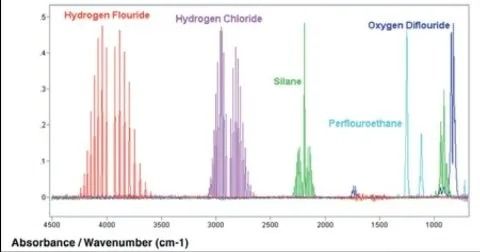
The library contains over 2,500 spectra covering over 165 different gases. Of these, over 100 are compounds included in environmental prevention regulations drawn up by international bodies such as the EPA (Environmental Protection Agency) and HAPs (Hazardous Air Pollutants).
There is also a large collection of IR libraries and spectra (e.g. semiconductors, solvents, polymers,fluorochemical compounds, organic, inorganic and acidic.
The instrument calibration can be performed with real gases or via software using standards collected according to EPA's and HAPs regulations with different concentrations and at different resolutions (0.5 / 1 / 2 cm-1).
The available spectra can be used for spectral research and converted into different formats for use with other data processing programs.